TALES BLOG / The People Who Care for Everyone Else Need Care, Too
This article is the third installment in The Comfort of Connection series exploring challenges like stress, anxiety, loneliness, burnout, and beyond. In each post, we look at what current research tells us, why it matters locally, and how Animal-Assisted Interventions can be part of a compassionate, evidence-informed response.
During the height of the COVID-19 pandemic, healthcare workers were asked to do the impossible. They cared for people who were sick, frightened, grieving, and separated from loved ones. They worked long hours in uncertain conditions, showing up day after day while carrying fear, exhaustion, and loss of their own.
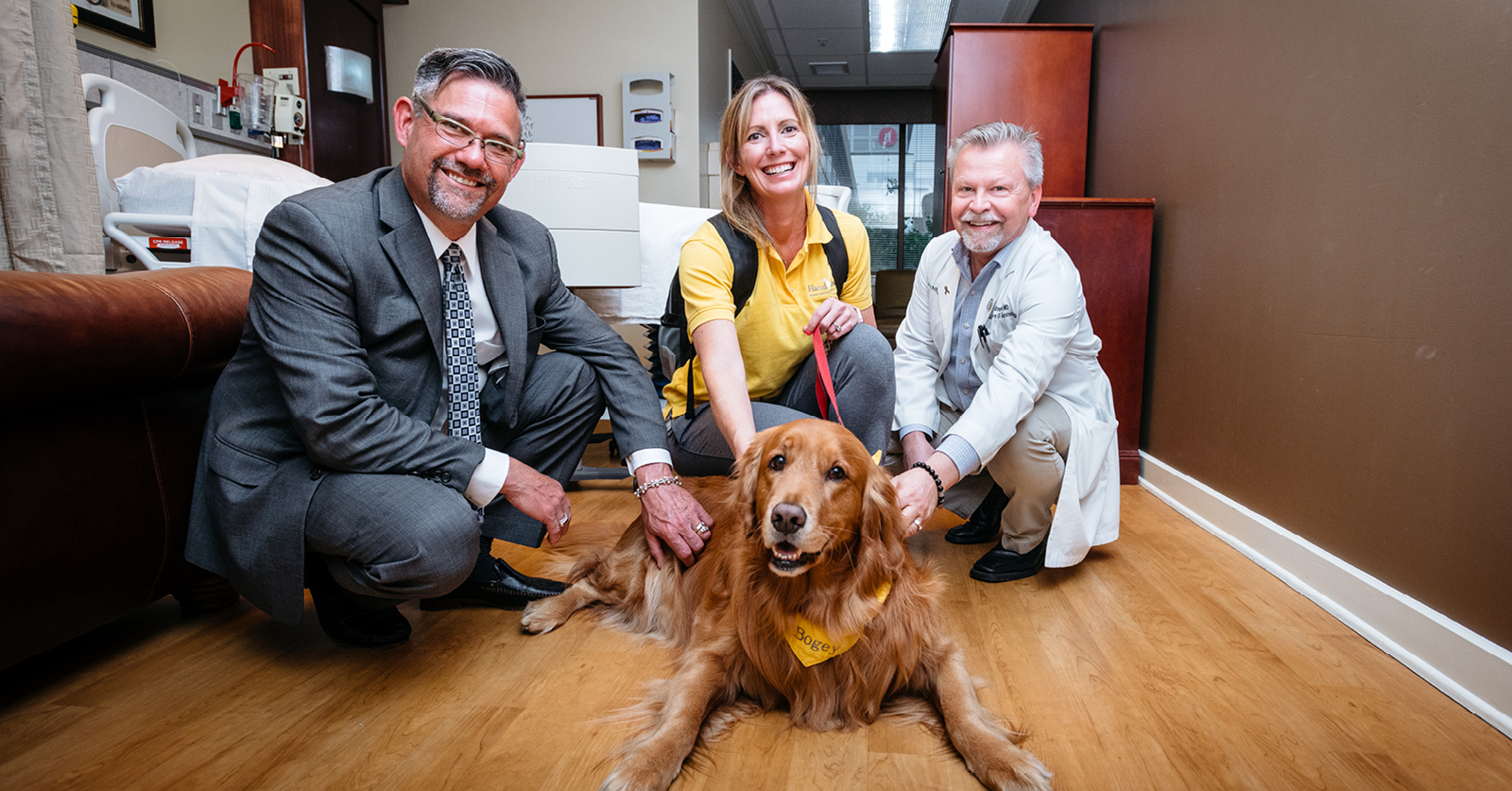
Hand in Paw created Wags for Wellness in collaboration with UAB Hospital as one small way to say: we see you.
The emergency phase of the pandemic has passed. The pressure has not.
Today, the people carrying the heaviest emotional loads are not limited to hospital staff. They include family caregivers, nurses, teachers, social workers, direct-care professionals, first responders, nonprofit staff members, and countless others whose work or home lives require them to put someone else’s needs first. They are the people who keep showing up, and they need care, too.
Caregiving Is Bigger Than Most People Realize
Caregiving is not always a formal job title. It can mean helping an aging parent get to appointments, managing medications, meals, school schedules, hospital visits, and bedtime routines. It can mean sitting beside a spouse during treatment, supporting a child with complex needs, or checking in on a neighbor who no longer drives. It can also mean working in a hospital, classroom, senior community, police department, fire station, human-service agency, or other setting where people routinely carry the stress, fear, and needs of others.
According to a 2025 report from AARP and the National Alliance for Caregiving, 63 million Americans, nearly 1 in 4 adults, provided ongoing care for an adult or child with a complex medical condition or disability during the previous year. That is an extraordinary number of people, and many are carrying more than anyone can see.
The Emotional Cost of Caring for Others
Caregiving can be deeply meaningful. It can be rooted in love, commitment, purpose, and compassion. It can also be exhausting.
The same AARP report found that many caregivers experience significant health and financial strain. One in five reported being in poor health, while many described negative financial impacts and disruptions to their work lives. Research by the Centers for Disease Control and Prevention (CDC) has found that caregivers experience poorer health outcomes than noncaregivers across a range of measures: during 2021 to 2022, caregivers reported higher rates of lifetime depression than noncaregivers, 25.6 percent compared with 18.6 percent.
That does not mean caregivers are weak. It means caregiving is hard.
The people who care for others are often praised for being selfless, dependable, and strong. But those qualities can become burdens when someone feels they are not allowed to rest, ask for help, or admit that they are struggling. Too often, the person everyone depends on becomes the last person anyone checks on.
The Stress on Healthcare Workers Is Still Real
Healthcare workers know this feeling well. Long shifts, staffing shortages, exposure to suffering and loss, demanding workloads, and the emotional intensity of patient care can take a real toll on psychological, emotional, and social well-being.
CDC notes that healthcare workers face challenging conditions and high stress levels that can affect both mental and physical health. Burnout is not simply a matter of someone needing to “take better care of themselves.” It is often tied to the conditions in which people are asked to work: too much demand, too little support, and not enough room to recover. That distinction matters.
Self-care matters, but responsibility cannot rest entirely on the people who are already carrying too much. Supportive workplaces matter. Reasonable workloads matter. Staffing, leadership, and access to mental health care all matter. And so do small moments that remind people they are more than the work they do.
Why Wags for Wellness Exists
Wags for Wellness began as a response to the extraordinary strain healthcare workers faced during the pandemic. What started as a way to support the people caring for all of us has since grown to include other high-stress professions and caregiving environments. Today, Hand in Paw Therapy Teams visit healthcare facilities, fire and police departments, workplaces, and other settings where people are doing difficult, emotionally demanding work.
The goal is not to pretend a Therapy Dog can solve burnout. A Therapy Dog cannot fix a staffing shortage. It cannot erase grief. It cannot make a twelve-hour shift easy or undo the stress of caring for someone you love.
But a visit can create a pause. It can bring laughter into a hard day, help colleagues reconnect with one another, and give someone who has spent hours caring for everyone else a moment when they do not have to be the strong one.
Sometimes that moment is not a cure. Sometimes it is simply a reminder: you are seen, you are valued, you deserve care, too.
Small Moments Can Matter
There is a temptation to dismiss small moments of relief as trivial. They are not.
For someone whose day has been filled with alarms, difficult conversations, paperwork, pain, or worry, a few minutes with a calm Therapy Animal can change the emotional temperature of the room. A wagging tail can interrupt a spiral of stress. A familiar Therapy Team can offer something to look forward to. A shared visit can help a group of coworkers laugh, breathe, and remember they are not carrying the day alone.
Animal-Assisted Interventions are not a replacement for therapy, medical treatment, workplace reform, or caregiver support services. They are one part of a larger ecosystem of care. But in environments where stress can become constant, a moment of calm, a moment of connection, a reminder that people matter, can be meaningful.
Caring for Caregivers Is Community Care
When we support caregivers, we support everyone who depends on them: patients, children, older adults, families, students, coworkers, neighbors, and communities. The people who care for others are not separate from the community’s health. They are central to it.
At Hand in Paw, we believe care should move in more than one direction. Through Wags for Wellness, our Therapy Teams bring comfort, connection, and a little breathing room to people who spend so much of their lives showing up for others.
They deserve that. Because the people who care for everyone else need care, too.
Support the Work
Hand in Paw provides Animal-Assisted Therapy services free of charge to our Program Partners. Your support helps bring comfort, connection, and moments of calm to people across North Central Alabama and Tuscaloosa.